Tuesday, 11 December 2012

Indigenous wisdom - Chippewa Medicine Man


I do not think that the measure of a civilization

is how tall its buildings of concrete are,

but rather how well its people have learned to relate

to their environment and fellow man.

Sun Bear - Chippewa medicine man


Find more Indigenous Wisdom, Insights, Wise Words and Quiet Reflections in the Archives - Luther Standing Bear, Dalai Lama, Martin Luther King, Frank Baum, Einstein, Maisie Cavanagh, Rumi, Tariq Ramadan...

Thursday, 29 November 2012

Spiritual practise - 'Letting go and moving on'


I'm re-blogging this post I wrote some time ago - apologies to those who have read it.  A situation arose the other day which reminded me of how much I have moved on from a situation that caused so much mental suffering - it was only through spiritual practise that I was able to do so.
 
I have always tried to 'walk the talk', to 'practise what I preach' - so to speak.  To me it is a fundamental part of authentic spiritual practise - living your beliefs, embodying them as a representative of your particular faith.  That's not to say you can't falter - we are human after all!

I remember being at a spiritual retreat many years ago and I was very surprised and somewhat shocked when someone I knew well - who had been a staunch spiritual practitioner for many years, spoke about the difficulty he had applying his teachings to his daily life.


The eight auspicious Buddhist symbols


At the time I was a relative newcomer to my chosen path, but even so I had always tried to live my practise.  To me it is an intrinsic part of being on a spiritual path in the first place.  Living your teachings is fundamental to spiritual growth, adhering to your beliefs even in really challenging situations - those moments that inevitably come along to confront you, when it is so easy to jump into the accompanying surge of emotion that wants to sweep you along with it.   

Before, I jumped.  Once I started living my practise, I paused, stepped aside - into a space that let me become an observer instead of a participant, watched the surge dissipate.  Came away from the whole sorry situation a better person.  A conversation recently got me thinking about 'walking the talk' the other day. 

I was asked how I had overcome the deep pain that had been inflicted on my family and I through the 'un-enlightened' actions of another.  I thought instantly of this Buddhist Bodhisattva prayer;


image sourced: freedigitalphotos.net


May all beings enjoy happiness
And have whatever causes happiness

May they be free from suffering
And whatever causes suffering

May they never be separated from the
Pure happiness which is without suffering

May they remain in great equanimity
Beyond attachment or aversion, to things near and far.


This particular situation had dragged on for some years.  It was one of the worst things my family has been through.  It was profoundly challenging and extremely difficult.  I got to point - which I admit did take some time - where I knew that I had to get back to a place of peace. The pain and suffering was causing me too much damage. That meant being more diligent, going deeper, more intently into my spiritual practise.

After a time I automatically started to include this person in my daily meditation visualisations - it's something I do regularly for family and friends who need healing.  One day I just popped her in there, saw her surrounded in peace, genuinely wished protection, health and happiness for her, understood that her harsh actions came from a place of ignorance, that - like everyone of us, what she most wanted in life was kindness, peace and love.

I kept doing this everyday until it became second nature to me, until finally - when I occasionally caught myself dwelling once again on what had happened, there was no reaction, the pain was gone, the intensity that use to come with the emotions attached to it, had dissipated as though they had never been.

And then one day, the situation turned. She stepped forward instead of back. Things healed, became as they should be. That to me is the power of authentic spiritual practise.  The power of this prayer - seeing ourselves reflected in each other.  Understanding that compassion - if lived and practised authentically, has no boundaries.  No limitation.


You may also like 'Memoir of a pilgrim - Transcending death' and  'Meditation - What the Buddha learnt'  in Popular Posts and Archives.


Saturday, 24 November 2012

Indigenous wisdom - 'Aboriginal Proverb'


You may also like Indigenous Wisdom - 'Maisie Cavanagh' in September Archives.  See also Hindu Wisdom - 'Castle of Brahma'.

Thursday, 22 November 2012

Natures sacred manuscript - 'Hazrat Inayat Khan'


imagesource:freedigitalphotos.net


There is one Holy Book, the sacred manuscript of nature, the only scripture which can enlighten the reader.  Most people consider as sacred scriptures only certain books or scrolls written by the hand of man, and carefully preserved as holy, to be handed down as divine revelation. 

Men have fought and disputed over the authenticity of these books, have refused to accept any other book of similar character, and, clinging thus to the book and losing the sense of it, have formed diverse sects. 

The Sufi has in all ages respected all such books, and has traced in the Vedanta, Zend-Avesta, Kabbalah, Bible,Quran, and all other sacred scriptures, the same truth which he or she reads in the incorruptible manuscript of nature, the only Holy Book, the perfect and living model that teaches the inner law of life. 

All scriptures when compared to natures manuscript, are like little pools of water before the ocean.  To the eye of the seer every leaf of the tree is a page of the Holy Book that contains divine revelation, and he or she is inspired every moment of life by constantly reading and understanding the holy script of nature.

- Hazrat Inayat Khan


See Archives for Wise Words, Insights and Quiet Reflection from the Dalai Lama, Rumi, Ramakrishna, Martin Luther King, Einstein, Luther Standing Bear, Pope Benedict, Sister Joan Chittister and many more

Sunday, 18 November 2012

Wise words - 'Albert Einstein'


A human being is part of the whole we call the universe, a part limited in time and space.  He experiences himself, his thoughts and feelings as something separated from the rest - a kind of optical illusion of his consciousness.  This illusion is a prison for us, restricting us to our personal desires and to affection for only the few people nearest us.  Our task must be to free ourselves from this compassion, to embrace all living beings and all nature.

- Albert Einstein


Find more 'wise words' by Einstein, Sister Joan Chittister, Pope Benedict 1V, the Dalai Lama, Martin Luther King and others in the Archives

Thursday, 15 November 2012

Quiet Reflection - 'Rumi'


imagesourced: eternity.org.au


'Let the beauty we love, be what we do. There are a thousand
ways to kneel and kiss the earth'.
 
- Rumi


Find more reflections, wise words and insights in the Archives

Tuesday, 13 November 2012

'Happy Diwali'


Namaste! - 'Happy Diwali' to my Indian readers and to all those who celebrate this wonderful time of year.  May everyone of you be showered in peace, joy and prosperity.  And may the world be awash in it too.

Tuesday, 6 November 2012

Buddhist student, Christian Gospel


'Two thousand years ago, a brotherhood of holy men and women, living together in a community, carried within themselves all of the seeds of Christianity and of future western civilization' - they were the Essenes.


For me, the magic of the Interfaith path means that by being open to the spiritual wisdom from a vast range of traditions, one is always encountering the most beautiful, inspiring and insightful texts which we would otherwise remain ignorant to.

I came across the deeply beautiful Essene Gospel of Peace some months back and it really resonated with me, so much so that now I frequently include it in my spiritual practise. I have done many prayers during my time as a spiritual practitioner and I can honestly say that none has moved me as much as this beautiful gospel.


The impact of the prayer was physical. I automatically began reciting it out loud and very slowly as well - which I have continued to do. It was as though I inherently perceived it to be an almost mantric meditation and certainly halfway through the first recitation, the impact of it’s power was felt right through my physical being.

It started off as a tingling sensation on the top of my head, moved through my body leaving a feeling of great awe.   It raised the hairs on my arms, caused my eyes to well with tears as the beauty and meaning of the words, the visual display they conjured in my mind, stirred within me what felt like a primordial or ancient recognition and understanding.  An old remembering, an inner knowing.

I have had a few extraordinary ‘spiritual moments’ and experiences in my time, but the physical impact of this gospel, the depth of beauty that it contains for me personally, I have never experienced before - that to me says much about the Interfaith path and approach also. 

I don’t take the term God to mean what it does in the Christian sense.  I perceive God as the Divine - an animating force, universal consciousness, well beyond our man-made constructs, our bias and ideas, well beyond all limitation - exceeding even all thought. 


Having this view - even though I come from a Buddhist background, allows me to come to a diverse range of sacred texts with open, all embracing acceptance.   It allows me to see through to the heart of what is written or spoken of, what is perceived and experienced by the author and so share in that, shape it into my own personal insight, interpretation, experience.


This beautiful gospel informs us that right from the moment we enter the world, God is with us - in our first breath, our first word, our first thought, song, love. Not only that, God is everywhere, infusing and animating every aspect of our existence - physical and otherwise. God in fact, speaks to us every second of every moment. All we have to do, to hear, to know is…‘be still’.

‘I speak to you through the trees and forest. Be still , Know I am God…I speak to you through the valleys and the hills. Be still, Know I am God…I speak to you through the peace of the evening. Be still, Know I am God...I will speak to you when you are alone.  Be still, Know I an God...’

To pause and ‘be still’, to pause and ‘Be’ is never more needed in today’s chaos driven world. To pause and ‘see’ is just as important.  

This ancient gospel is possibly more relevant and meaningful in todays modern world than when it was written 2,000 years ago.  The Essenes had an intimate spiritual affinity with the natural world as is clearly evident in this prayer. They moved lightly on their sacred earth - their laws and doctrines were structured as such.

For me reading and reciting this gospel is a reminder of that.   It provides me the opportunity to pause, to be still, to see with renewed clarity, with deeper respect.

My interpretation of the Divine, of God, is echoed in this gospel. God is here. God is everywhere.  The Divine has always been.  Always will be.  The Divine is what Is.   Us and Other.  One.


To read the Essene Gospel of Peace, see Prayers for Peace in the Pages section.


Friday, 2 November 2012

Interfaith prayer - 'Sr. Mary Lou Kownacki'


I bow to the one who signs the cross.
 
I bow to the one who sits with the Buddha.
 
I bow to the one who wails at the wall.
 
I bow to the Om flowing in the Ganges
.
I bow to the one who faces Mecca,
 
whose forehead touches holy ground.
 
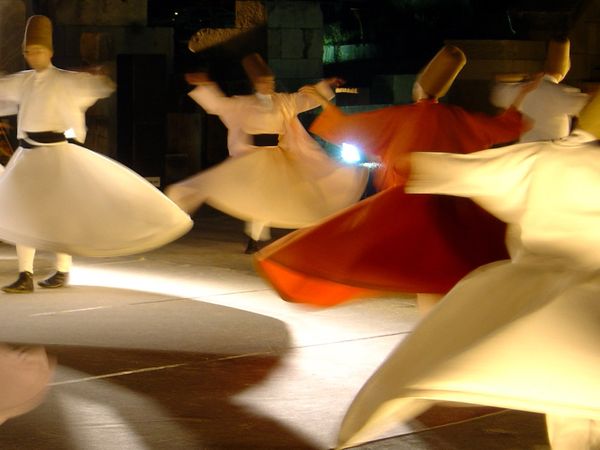
I bow to dervishes whirling in mystical wind.
 
I bow to the north,
 
to the south,
 
to the east,
 
to the west.
 
I bow to the God within each heart.
 
I bow to epiphany,
,
to God's face revealed.
 
I bow.  I bow.  I bow.
 
 
- Sr. Mary Lou Kownacki


You might also like 'Prayers for peace' in the Pages section.

Tuesday, 30 October 2012

Meditation - 'what the Buddha learnt'


'Prayer is talking to God; meditation is listening to God'


Meditation or quiet, contemplative, inner reflection features prominently in all of the worlds great religious movements. Its guise just assumes different forms.

Starting a spiritual journey often entails looking for inspiration, guidance and insights from others who have travelled similar paths.  Once you begin delving into the backgrounds of some of the world’s great prophets, masters, spiritual teachers you discover that almost all accessed a higher Truth, by going within.

On the Buddhist path, battling the ego to liberate the mind through meditation is a fundamental part of the journey and as the Buddha’s life shows, it is a battle and journey worth taking.  For as Prince Siddhartha discovered, only by turning inward are we able to realise our true potential and in doing so, transcend suffering in its entirety.

For years the Prince searched for an answer to this very problem 'why do we suffer and how do we transcend it?'. It was a search that eventually led him to Bodhgaya where he sat beneath a Bodhi tree for seven weeks, absorbed in sustained, contemplative meditation.


imagecredited:somewhereindharmma.blogspot.com


During that time he analysed, came to understand and finally experience, the true nature of all existence, including his mind, a vast, stainless, pristine awareness, unencumbered and limitless in potential.

He also discovered he was not unique - everyone was blessed with this same ‘Buddha nature’.  He saw all of his past and future lives, understood how karma worked, recognized the changeable, impermanent, empty nature of all phenomena and that ignorance of this fundamental fact was the root cause of all suffering.

He understood that because we are unaware, don’t know of or recognise that inherent, enlightened aspect at the very core of our being, our entire existence is spent identifying with and through the ego - our false notion of a permanent self or “I“. That it was this delusion that gave rise to all our problems and issues and subsequent suffering.

And, fortunately for us, the Buddha also saw the path that was needed to fully transcended this endless cycle.  When he finally rose from his reverie, the Prince had become a fully enlightened Buddha. Without meditation the Prince’s story would have read very differently, the Buddhist path would not have come into existence.


I have met many people who struggle with meditation. They all say the same thing, “I cant get my mind to stay still long enough to focus”. When I started out on this path, I struggled with it to - at times I still do. It can be a hard thing sitting down with the intention of stilling a monkey mind that would rather be jumping and dashing all over the place.

Quite simply, our minds are not use to being still. Even when we sleep, our minds are engaged, overflowing and immersed in restless dream imagery. From the moment we first draw breath in the world till the time we leave it, our minds are continually bombarded with sensory stimuli. Superficially speaking, satiating our senses and desires is what we are all about. Is it any wonder then that for some of us, meditation can be nothing more than a battle?

And what about peace?   Meditation is suppose to be a peaceful practise which generates great calm. But trying to subdue the mind can be anything but peaceful - it’s not surprising that many people give up in despair.  Is it really possible or even necessary to tame our monkey minds anyway?

If however, like Prince Siddhartha Gotama, you have reached a point in your life where you feel the urgency, the undeniable need to embark on some serious 'soul searching', then as the Buddha’s example clearly shows, mastering the mind through the simple yet often difficult act of meditation is crucial to uncovering great, inner truth.

Meditation allows us to look at ourselves through a microscopic lens with complete and at times raw, honesty. And more often than not, we don’t want to look at ourselves - to do so can be very confronting. Often, we would rather do anything else than turn our attention inward, to closely assess and address our bias, prejudice, hang-ups and issues.   It is much easier to ignore our faults, deny their existence, shift blame to someone else - even the world in general, than to have that hard and honest, much needed internal dialogue with ourselves.


But to fully understand, to discover and learn the truth about who and what we really are, the exact nature of our true potential, we have to go deep inside ourselves. Uncover and sift through the layers, to find and expose the jewel that is buried deep within. 

Perseverance is fundamental to successful meditation. Like anything else, you get better at it the more you do it, so that eventually,

' [...]we create an inner space and clarity that enables us to control our mind regardless of the external circumstances. Gradually we develop mental equilibrium, a balanced mind that is happy all the time, rather than an unbalanced mind that oscillates between the extremes of excitement and despondency.

If we train in meditation systematically, eventually we will be able to eradicate from our mind the delusions that are the causes of all our problems and suffering. In this way, we will come to experience a permanent inner peace, known as "liberation" or "nirvana". Then, day and night in life after life, we will experience only peace and happiness'.


You may also like 'The practise of pure altruism - a Buddhist perspective' in Popular Posts  


Monday, 29 October 2012

Interfaith Reflection - 'HH. Dalai Lama'


Find more wise words and insights from the Dalai Lama in the Archives - see also Advocates for Peace - the Dalai Lama in May Archives.  You may also like Prayers for Peace in the Pages section and the various Peace posts that featured in September.

Saturday, 27 October 2012

Interfaith book - 'Seeking the Sacred'


From the moment I first spied this beautiful book I was captivated - the cover itself is a subtle suggestion of the divine at work in it's pages.  Then I opened the book... and fell in love.

First with Iqbal whose poetry entranced,

 
Who can tell what miracle
Love has in store for us
If only we can find the courage
to become one with it?

Everything we now know
is only the beginning of another knowing
that has no end.


Then with Stephanie Dowrick and her precious book.  Seeking the Sacred: transforming our view of ourselves and one another has become a constant companion of mine. 

Through deep and honest personal reflection, the shared stories of others and beautiful insights drawn from a range of different faith traditions, Stephanie shows how 'the sacred can transform the way we understand and value life, changing forever how we interact with others and care for ourselves'.

There is little doubt that by doing so we are able to go 'beyond cultural divisions and religious cliches to discover what makes our lives sacred, satisfying and meaningful'.   The book offers me much - wisdom, insight, spiritual sustenance, moments for quiet reflection, guidance and inspiration. 

As well as Iqbal's timeless wisdom,  the book contains many more such beautiful reflections, teachings and scriptures from a range of different wisdom and faith traditions, all of which allow us to pause...wonder...and marvel.


Seeking the Sacred is like a chalice of wisdom. It overflows with inspired and inspiring quotes and teachings…Through it all is Stephanie Dowrick’s distinct voice…her empathy for how hard the journey is shines alongside her belief that the sacred can illuminate the way home.… While Seeking the Sacred is about personal transformation, it is a political, even polemical work… a rallying cry that to save the planet we must shed our spiritual and cultural provincialism… - Claire Scobie, Sydney Morning Herald.

Seeking the Sacred is the most profound book for those of us who are exploring in the deepest way through our lives the reality that we are ‘spiritual beings on a human path’. …I have cried and laughed and shared the stories and teachings from this book during the past few days with so many friends and family…It’s a mirror of our inclusive spiritual journeys reaching across many different paths and so needed in the time in our world.Reverend Hilary Star, Auckland, NZ


See Pages for more Great Reads.  You might also like A World of Prayer in August Archives

Wednesday, 24 October 2012

Wise words - 'Sister Joan Chittister'


'We are spiritual resources for one another. Every one of those ideas is embedded in the Christian scriptures itself, as far as I’m concerned. But when I see them emphasised, under-lined, lived out with a more startling awareness in others, then I’m brought back, to the fulfilment of my own'.

- Sister Joan Chittister


Sister Joan D. Chittister, O.S.B. is a Benedictine nun, author and speaker. A member of the Benedictine Sisters of Erie, Pennsylvania, where she served as prioress for 12 years, Sister Joan is an author and lecturer.


See Archives for 'wise words' by - Frank Baum, Einstein, Pope Benedict and more